
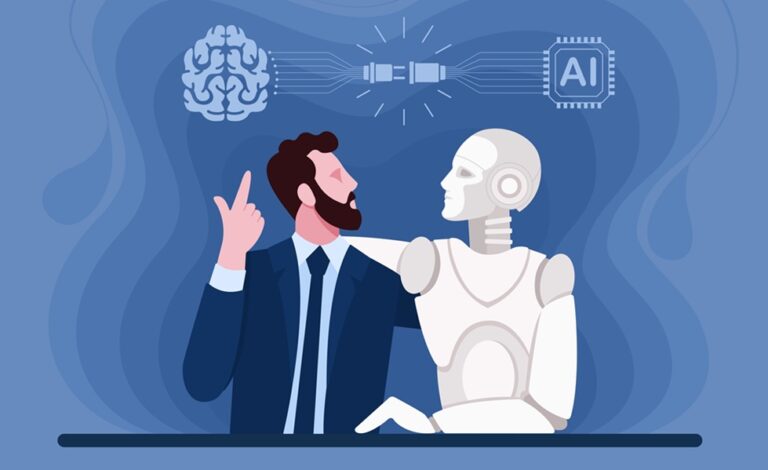
Artificial intelligence is entering regulated industries faster than governance frameworks can adapt.
Financial institutions are embedding machine learning models into fraud detection and credit risk assessment. Healthcare systems are deploying AI-assisted diagnostic tools and clinical documentation assistants. Infrastructure operators are experimenting with predictive maintenance algorithms capable of identifying equipment failures before they occur.
Across sectors, executives see enormous potential. Artificial intelligence promises to increase efficiency, reduce costs, and augment human expertise in complex decision environments.
Yet beneath the excitement surrounding AI deployment lies a challenge that few organizations have fully confronted.
Many companies cannot clearly demonstrate who within their workforce is qualified to use these systems—and why.
This emerging gap between technology adoption and workforce capability is creating what may become one of the defining governance challenges of the AI era.
We are entering a period in which organizations must rethink how they verify competence, accountability, and authorization within AI-enabled environments.
For decades, regulated industries have relied on relatively stable mechanisms to ensure workforce competence.
These mechanisms typically included a combination of:
professional education and certification
supervised experience
licensing requirements
formal training programs
continuing education obligations
Learning management systems (LMS platforms) emerged as the technological backbone supporting these structures. They allowed organizations to track course completion, deliver compliance training, and maintain records demonstrating that employees had fulfilled mandatory requirements.
In many contexts, this approach worked well enough. Training records served as a proxy for competence. When auditors or regulators examined operational practices, organizations could demonstrate that employees had completed the necessary learning modules.
However, artificial intelligence introduces new layers of complexity into decision-making environments.
And those complexities are beginning to expose the limitations of training-based governance systems.
Traditional training programs are designed to transfer knowledge.
Employees learn how to operate systems, follow procedures, and comply with regulatory requirements. The assumption underlying this model is that once an individual understands the relevant rules and tools, they can apply them appropriately in practice.
Artificial intelligence complicates this assumption.
In AI-enabled environments, professionals increasingly interact with systems that generate probabilistic predictions, recommendations, and analyses. These outputs are not deterministic instructions; they are suggestions that must be interpreted within context.
Consider a few examples.
A clinician reviewing an AI-generated diagnostic suggestion must understand when the model’s output is reliable and when it may be biased or incomplete. A financial analyst using algorithmic risk models must recognize when market conditions invalidate historical assumptions embedded within the algorithm. An infrastructure engineer interpreting predictive maintenance signals must evaluate whether automated alerts accurately reflect real-world conditions.
In each case, effective use of AI requires a blend of technical understanding, domain expertise, and judgment.
Completing a training module explaining how an AI system works does not guarantee that a professional possesses the capability to use that system safely or responsibly.
Training, in other words, is necessary—but no longer sufficient.
Regulated industries operate within a culture of accountability.
When failures occur—whether clinical errors, financial losses, or infrastructure incidents—investigators seek to understand how decisions were made and whether appropriate safeguards were in place.
In AI-enabled environments, these investigations increasingly raise new questions.
Who interacted with the AI system involved in the decision?
What qualifications did that individual possess?
How was their capability to interpret algorithmic outputs verified?
What governance structures ensured appropriate oversight?
Many organizations struggle to answer these questions clearly.
Learning management systems can demonstrate that employees completed training modules. HR systems may record certifications and credentials. Operational systems may log user interactions with software tools.
Yet these systems rarely integrate their information in a way that produces a coherent view of workforce capability.
As a result, organizations face a fragmented governance landscape in which training records exist, but true capability verification remains elusive.
One reason organizations struggle with this challenge is that capability is inherently complex.
Professional competence rarely derives from a single factor. Instead, it emerges from the interaction of multiple signals.
These signals often include:
formal training completion
supervised experience in operational environments
professional certifications and licensing
demonstrated performance outcomes
recency of practice
contextual judgment developed over time
Artificial intelligence introduces additional dimensions.
Professionals must now develop competencies related to:
understanding algorithmic limitations
recognizing model bias or drift
evaluating when automated recommendations require human intervention
interpreting probabilistic outputs within operational contexts
Capturing these dimensions within traditional training systems is difficult. Most enterprise learning platforms are designed to track attendance and course completion—not real-world capability.
Yet as AI becomes embedded within critical workflows, organizations will need systems capable of integrating multiple signals into a dynamic view of workforce readiness.
Addressing the AI competency challenge will require a fundamental shift in how organizations think about workforce governance.
Rather than focusing exclusively on training compliance, enterprises will increasingly need capability infrastructure.
Capability infrastructure refers to systems that integrate data from multiple organizational sources in order to verify workforce readiness and authorization.
Such systems may incorporate inputs from:
learning management platforms
HR systems containing credentials and certifications
operational systems documenting task performance
supervision structures and mentorship records
performance evaluations and competency assessments
By combining these signals, organizations can build dynamic profiles of workforce capability.
These profiles allow leaders to answer critical operational questions:
Which employees are authorized to perform specific tasks?
What evidence supports that authorization?
When were competencies last verified?
Where do capability gaps exist across the organization?
In an AI-enabled environment, the ability to answer these questions becomes essential.
Enterprise technology evolves in waves.
Organizations build new infrastructure layers when emerging risks require better visibility, control, and governance.
Over the past several decades, companies have invested heavily in systems designed to manage:
financial reporting
identity and access management
cybersecurity
regulatory compliance
Each of these layers emerged in response to new operational challenges.
Artificial intelligence is creating similar pressures.
As AI systems influence increasingly consequential decisions, organizations will need infrastructure that verifies not only who has access to technology but who is qualified to use it responsibly.
This capability layer will likely integrate with existing enterprise systems rather than replace them. Learning management platforms will continue to deliver training. HR systems will continue to manage employee data.
But above these systems will sit a new governance layer focused on verifying workforce competence.
For executives overseeing AI adoption, the competency challenge presents both risks and opportunities.
Organizations that fail to address workforce capability may encounter regulatory scrutiny, operational failures, or reputational damage if AI systems are misused.
Conversely, organizations that develop robust capability infrastructure will gain significant advantages.
Clear governance frameworks enable faster technology deployment, stronger regulatory relationships, and greater confidence in operational decision-making.
In highly regulated sectors, the ability to demonstrate workforce competence may become a prerequisite for scaling AI adoption.
Artificial intelligence is often framed as a technological transformation.
But its most profound implications may ultimately lie in governance.
As AI systems become embedded within core workflows, organizations will need to rethink how they verify human capability, assign responsibility, and maintain accountability.
Training programs will remain essential. But training alone cannot answer the questions regulators, executives, and risk officers will increasingly ask.
The organizations that succeed in the AI era will be those that build systems capable of verifying not only what employees have learned—but what they are truly capable of doing.
Because in regulated industries, the most important question is never simply what technology can accomplish.
It is always:
Who is qualified to use it—and why.
The urgency of the AI competency challenge becomes clearer when we examine the pace at which AI adoption is accelerating across regulated sectors.
According to McKinsey’s 2024 Global AI Survey, more than 65% of organizations report regular use of generative AI in at least one business function, nearly double the adoption rate reported the previous year. In financial services, adoption is particularly rapid: nearly 75% of large financial institutions report deploying AI across risk management, fraud detection, or customer decisioning systems.
Healthcare shows a similar trajectory. Research from the American Medical Association indicates that over 38% of physicians report using AI-assisted tools in clinical workflows, including diagnostic support systems, automated note generation, and imaging analysis.
Infrastructure and energy sectors are also moving quickly. A 2023 Deloitte report on industrial AI adoption found that 67% of energy and utilities companies are implementing predictive maintenance algorithms across operational assets.
These numbers illustrate a striking trend: artificial intelligence is moving rapidly from experimental use to operational deployment.
Yet the governance structures responsible for verifying workforce capability have not evolved at the same pace.
In most organizations, the introduction of AI tools is accompanied by training sessions, user documentation, and compliance briefings. Employees are instructed on how to use the system and what policies govern its operation.
But the introduction of training programs alone does not answer the deeper governance question: how does the organization verify that individuals interacting with AI systems possess the judgment and expertise required to use them responsibly?
The problem is not merely theoretical. The consequences of misapplied AI are already emerging.
Recent incidents across regulated industries illustrate how quickly accountability questions emerge when AI systems influence decisions.
In healthcare, researchers have documented multiple cases in which AI diagnostic tools demonstrated racial or demographic bias due to limitations in training datasets. In several widely cited studies, diagnostic algorithms performed significantly worse when evaluating patients from underrepresented populations.
In financial services, algorithmic decision systems have faced regulatory scrutiny for credit risk assessments that produced discriminatory outcomes, prompting investigations from regulators in both the United States and Europe.
Meanwhile, in aviation and industrial infrastructure, predictive maintenance algorithms have occasionally produced false positives or missed critical failure signals, highlighting the importance of human oversight in interpreting algorithmic alerts.
In each of these cases, the technical question of whether the AI system functioned correctly quickly gives way to a governance question:
Who was responsible for interpreting the system’s outputs?
And what qualifications did that person possess?
Regulators and investigators rarely stop at identifying a technological failure. They also examine the organizational structures responsible for supervising the technology’s use.
In many cases, organizations struggle to demonstrate that individuals interacting with AI systems possessed clearly defined competencies.
This is where the emerging capability crisis becomes most visible.
Most enterprise learning systems were designed to answer one fundamental question:
Did the employee complete the required training?
This design reflects the regulatory environment in which these systems emerged. Compliance frameworks historically required organizations to demonstrate that employees had received training related to policies, procedures, and regulatory obligations.
Completion records provided sufficient documentation to satisfy auditors.
But AI-enabled decision environments introduce a different set of requirements.
In these contexts, organizations must demonstrate not only that employees received training, but that they possess the capability to interpret and apply AI outputs appropriately.
This distinction may appear subtle, but its implications are profound.
Training completion is a binary metric. An employee either completed the course or did not.
Capability, by contrast, is dynamic.
It evolves over time as employees gain experience, encounter new situations, and interact with increasingly complex systems.
A professional who completed AI training six months ago may not necessarily possess the same level of capability today if they have not regularly applied those skills.
Similarly, an employee who recently demonstrated strong judgment in interpreting AI outputs may possess greater capability than someone who completed the same training but has limited real-world experience.
Capturing these nuances requires a fundamentally different approach to workforce governance.
If organizations are to address the emerging competency challenge, they will need to move beyond training compliance systems and develop capability infrastructure.
Capability infrastructure refers to integrated systems that verify workforce readiness by combining multiple sources of information about employee competence.
Instead of relying solely on training records, capability infrastructure aggregates signals from across the organization.
These signals may include:
formal training completion
professional certifications and licensing
supervised experience within operational workflows
performance metrics associated with specific tasks
peer or supervisor evaluations
recency of task execution
real-world outcomes associated with decisions
By integrating these signals, organizations can create dynamic profiles of workforce capability.
Such profiles allow leaders to answer critical operational questions with greater precision.
For example:
Which employees are authorized to operate specific AI-enabled systems?
What evidence supports that authorization?
How recently were their competencies verified?
Where do capability gaps exist within the organization?
This information can be invaluable not only for compliance purposes but also for operational planning.
Organizations that understand the distribution of workforce capability can deploy talent more effectively, identify training priorities, and reduce operational risk.
Implementing capability infrastructure requires organizations to rethink how workforce data is structured and managed.
Three practical steps can help organizations begin this transition.
The first step involves clearly defining the competencies required to interact with AI-enabled systems.
These competencies should extend beyond technical training.
For example, an effective capability framework for AI-enabled decision environments may include:
understanding model limitations
identifying potential algorithmic bias
recognizing when human judgment must override automated outputs
understanding regulatory implications of AI-assisted decisions
By defining these competencies explicitly, organizations create a foundation for measuring workforce readiness.
The second step involves integrating data across systems that currently operate independently.
Learning management systems contain training records. HR platforms store information about employee credentials. Operational systems record user interactions with enterprise software.
Individually, these systems provide partial insights into workforce capability.
But when integrated, they can create a far more comprehensive picture of workforce readiness.
Emerging enterprise platforms are beginning to explore ways of combining these data sources into unified capability dashboards.
These dashboards enable leaders to visualize capability distribution across teams, departments, and operational units.
Finally, organizations must recognize that capability is not static.
Just as cybersecurity systems require continuous monitoring, workforce capability systems must verify competencies on an ongoing basis.
This may involve:
periodic competency assessments
performance reviews tied to AI-enabled tasks
supervised practice requirements
automated alerts when competencies require renewal
By treating capability verification as a continuous process rather than a one-time certification, organizations can ensure that workforce readiness evolves alongside technological change.
While the capability challenge presents risks, it also creates significant opportunities.
Organizations that build robust capability infrastructure will gain advantages in several areas.
First, they will be able to deploy AI technologies more confidently. Clear governance frameworks reduce uncertainty around accountability and oversight.
Second, they will strengthen relationships with regulators. Demonstrating rigorous capability verification processes signals that organizations take AI governance seriously.
Third, they will improve workforce planning. Understanding capability distribution allows leaders to allocate talent more effectively and identify emerging skill gaps.
Finally, organizations that solve this challenge early may shape the standards that regulators and industry bodies eventually adopt.
In many cases, governance innovations developed by industry leaders become the foundation for future regulatory frameworks.
Artificial intelligence is often framed as a technological revolution.
But its most significant implications may ultimately lie in governance.
As AI systems become embedded in operational decision-making, organizations will need new mechanisms to verify human capability, assign responsibility, and maintain accountability.
Training programs will remain essential.
But training alone cannot answer the governance questions that regulators, executives, and risk officers will increasingly ask.
The organizations that thrive in the AI era will be those that build systems capable of verifying not only what employees have learned—but what they are truly capable of doing.
Because in regulated industries, the most important question has never been what technology can accomplish.
It has always been—and will remain—
who is qualified to use it, and why.
About the author:
Hana Dhanji is the Founder & CEO of Cognitrex, an enterprise LearningOS platform and content design firm that helps organizations modernize learning and development.
Cognitrex works with enterprise teams to design and deliver role-based learning programs, onboarding pathways, and scalable training systems that improve workforce capability and performance. The platform combines LMS, LXP, and content infrastructure into a single system, paired with high-quality, scenario-based course design.
Hana is a former corporate lawyer at Sullivan & Cromwell and Hogan Lovells, having worked across New York, London, Dubai, and Toronto. She now advises organizations on how to move beyond fragmented training toward structured, high-impact learning systems.
She also serves as Treasurer and Chair of the Finance Committee for the UTS Alumni Association Board and as a Committee Member of the Ismaili Economic Planning Board for Toronto.
Learn more: