Professional Development Is a Core Business Function
Larger organization and other knowledge-intensive organizations, professional training directly affects work quality, risk exposure, client outcomes, and long-term retention.
Yet professional development is often delivered through fragmented approaches ad hoc workshops, static e-learning, informal mentoring, and manager-dependent coaching. This leads to inconsistent skill development, uneven standards across teams, and limited visibility into whether training is actually improving professional capability.
Professional development requires structure, reinforcement, and scale.
Common Professional Training Challenges
Inconsistent Skill Development
Professionals receive different training depending on practice group, office, or manager, resulting in uneven performance standards.
Limited Practical Application
Training often focuses on theory rather than real-world situations professionals face with clients, regulators, and internal stakeholders.
Over-Reliance on Senior Staff
Partners, managers, and senior professionals are expected to provide continuous coaching, creating bottlenecks and inefficiency.
Low Visibility Into Capability Growth
Organizations track attendance or CLE credits but lack insight into skill progression, readiness, and applied competence.
Difficulty Scaling Training
As firms grow across offices and jurisdictions, maintaining consistent professional training becomes increasingly complex.
A Structured Approach to Professional Development
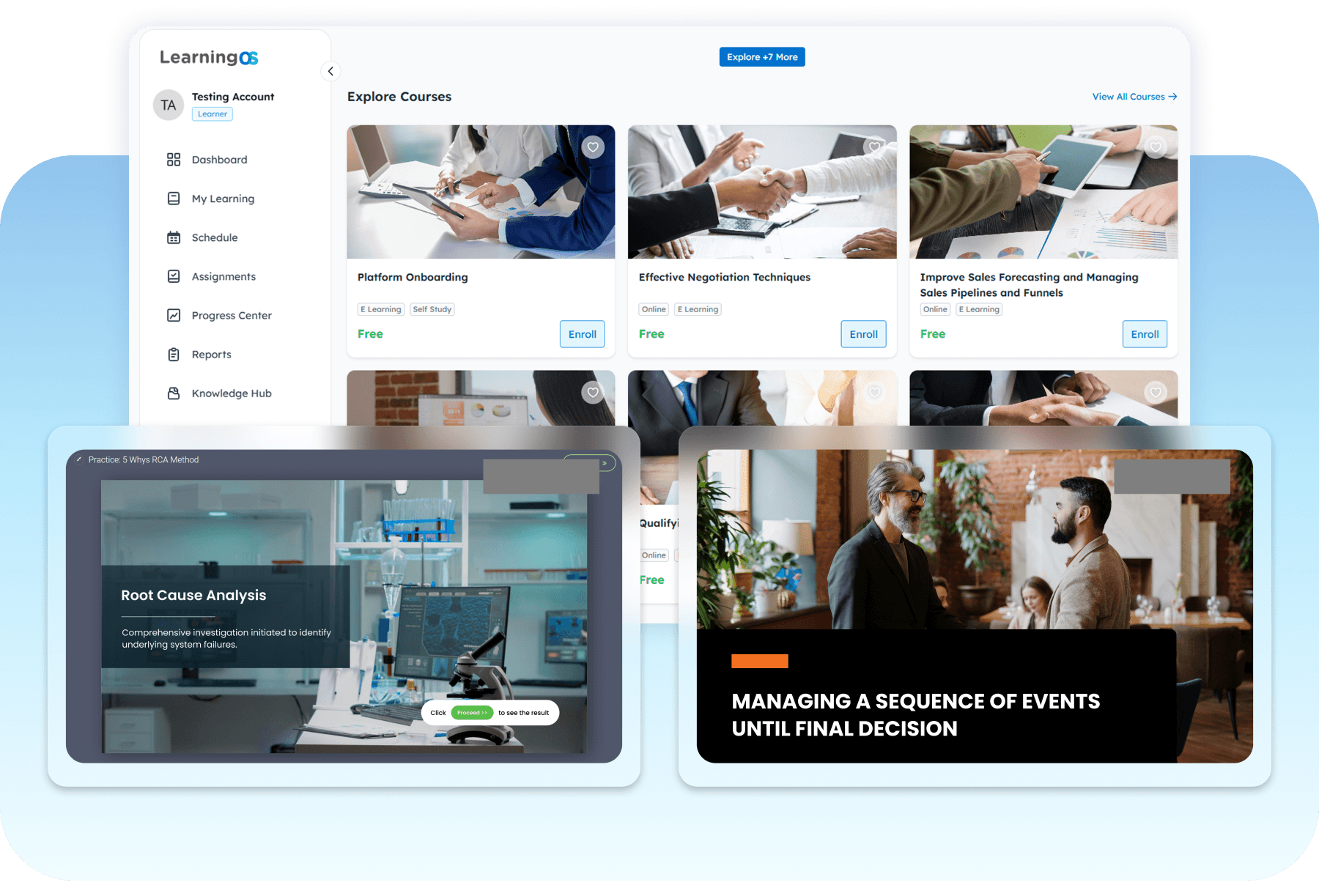
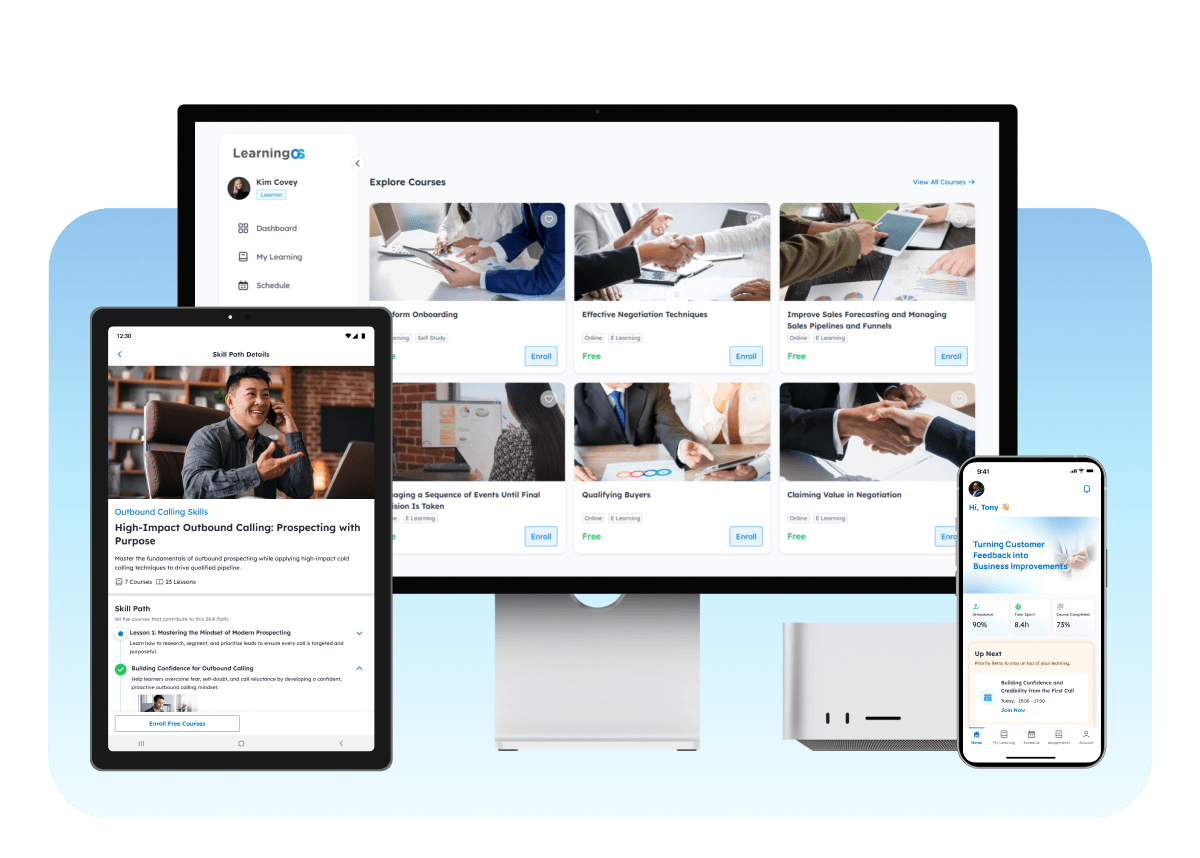
LearningOS provides a centralized platform for designing, delivering, and managing professional training programs at scale.Organizations can create structured learning paths aligned to roles, seniority levels, and practice areas, ensuring professional development is consistent, intentional, and measurable across the organization.This approach supports early-career professionals, experienced practitioners, and leadership development without relying solely on informal mentoring.
From Knowledge to Professional Judgment
Effective professional development goes beyond knowledge transfer. It requires practice, feedback, and reinforcement over time.LearningOS supports applied professional training by enabling:
Scenario-based learning aligned to real client and workplace situations
Exercises that reinforce judgment, communication, and decision-making
Structured reinforcement rather than one-off training events
Continuous access to firm-approved knowledge and resources
This model helps professionals develop confidence, consistency, and sound judgment in high-stakes environments.
Platform Capabilities Supporting Professional Training
Role- and Level-Based Learning Paths
Design training programs aligned to career stages, practice areas, and functional roles.
Centralized Knowledge Management
Maintain a single source of truth for firm policies, precedents, templates, and learning materials.
Flexible Training Delivery
Support instructor-led sessions, self-paced learning, and blended professional development programs.
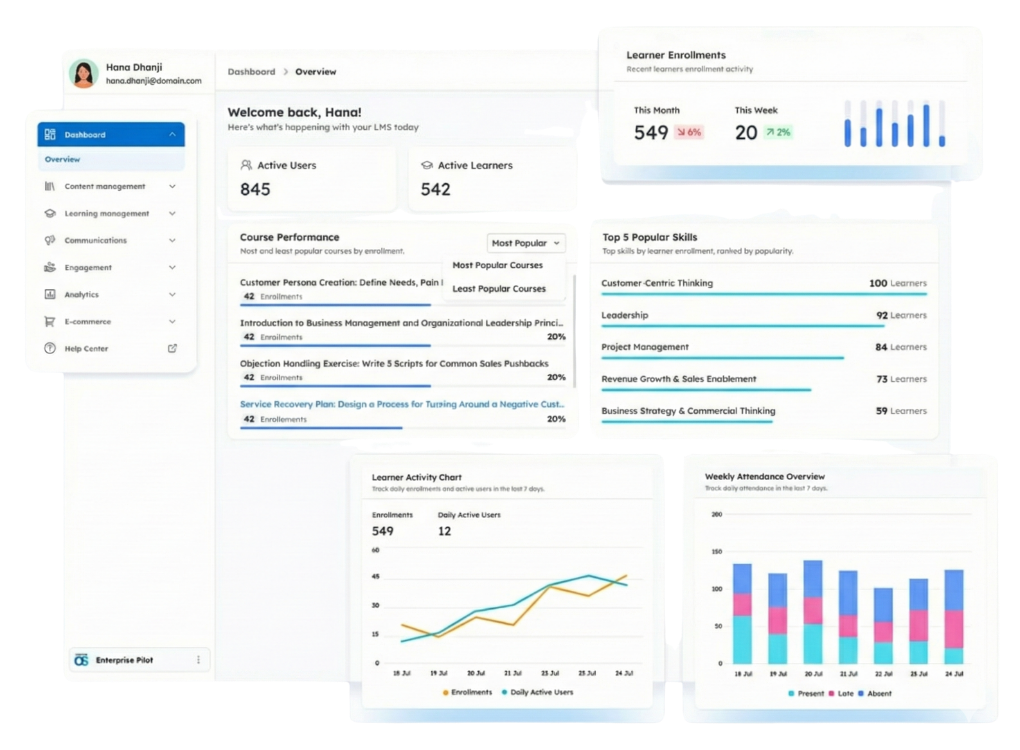
Clear Tracking and Reporting
Monitor participation, completion, and engagement across teams, offices, and jurisdictions.
Designed for Large and Complex Organizations
LearningOS supports professional training in environments where expertise, judgment, and consistency are critical, including:
Large, complex, high-regulated organizations Consulting and advisory
Consulting and advisory firms
Financial services and insurance
Accounting and audit firms
Large corporates with regulated or client-facing professionals
The platform respects professional autonomy while providing the structure required for scale.
Business Impact of Scalable Professional Development
A structured approach to professional training helps organizations:
Improve consistency of work quality across teams and offices
Reduce professional and reputational risk through clearer standards and reinforced judgment
Lower burnout and attrition by providing clearer development pathways
Reduce dependency on informal coaching from senior staff
Strengthen client trust and reputation through consistently high professional standards
Professional development becomes a repeatable system rather than a discretionary activity.
Build a Stronger,Consistent Professional Workforce
Create a structured, scalable approach to professional training and development—designed for complex, high-expectation environments.