Are new hires ramping up quickly or just trying to keep up?
As organizations grow, onboarding becomes increasingly fragmented. Different teams, managers, and regions deliver onboarding in different ways, leading to confusion, inconsistent performance, and longer ramp-up times.
Without a structured system, onboarding becomes reactive rather than intentional.
Common Onboarding Challenges
Inconsistent Experiences
New hires receive different information depending on team, location, or manager resulting in uneven readiness.
Slow Time to Productivity
Employees struggle to understand tools, processes, and expectations, delaying meaningful contribution.
Information Overload
Too much content delivered too quickly, without structure or prioritization.
Limited Visibility
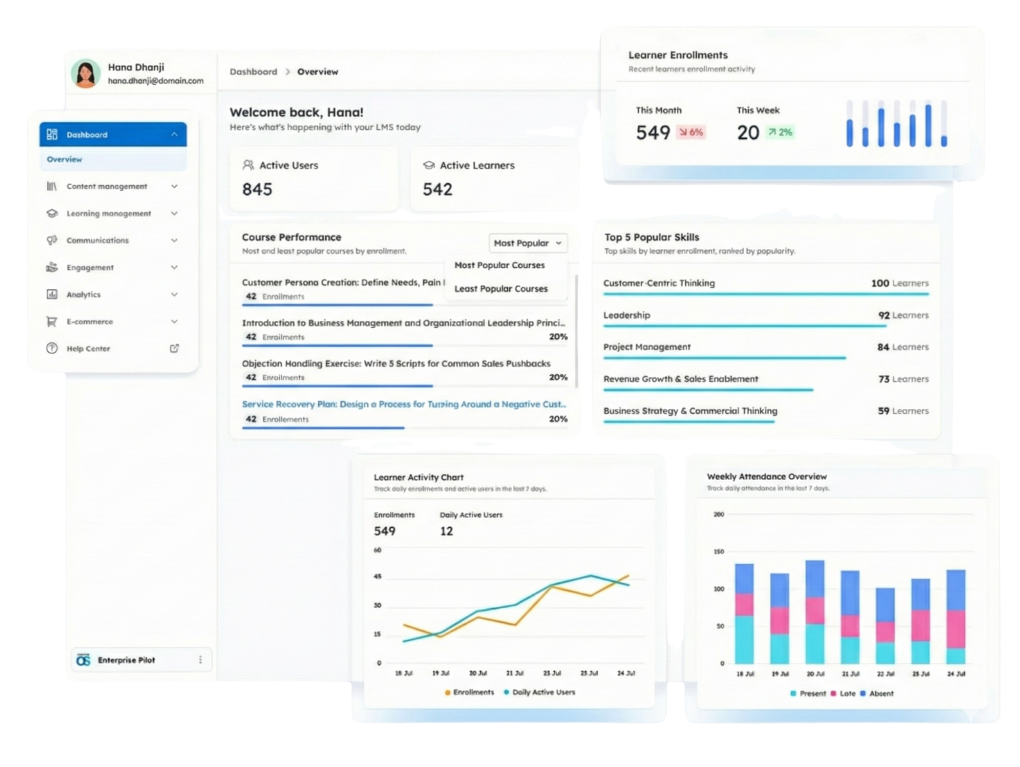
HR and leadership lack clear insight into onboarding progress, completion, and knowledge gaps.
Early Attrition
Poor onboarding increases disengagement and drives higher turnover in the first 6–12 months.
A Structured System for Onboarding at Scale
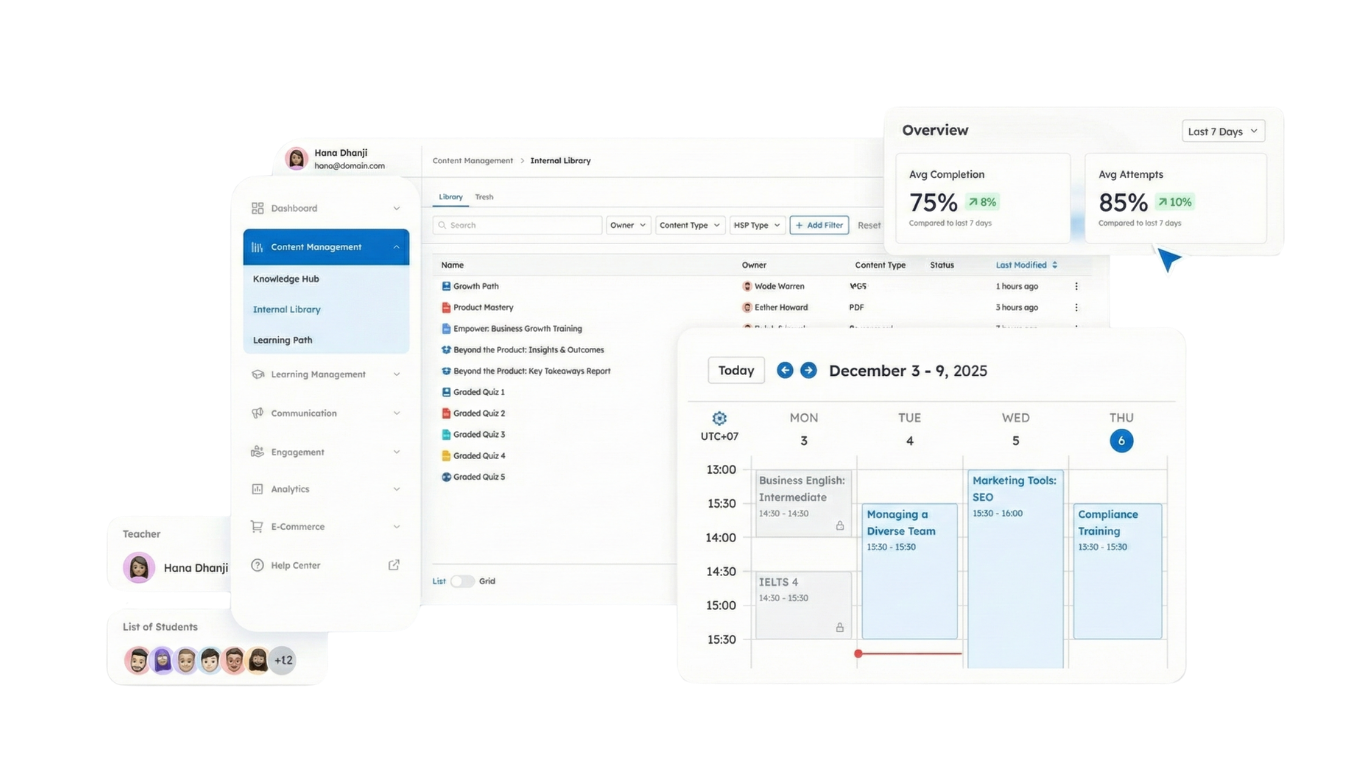
LearningOS centralizes onboarding into a single, structured learning experience, ensuring every new hire receives the same foundational knowledge while allowing flexibility by role, function, or region.Onboarding becomes repeatable, measurable, and scalable.
A Hybrid Approach to Onboarding
Move beyond static orientation sessions and PDF checklists.LearningOS supports a hybrid onboarding model that blends:
Instructor-led onboarding sessions
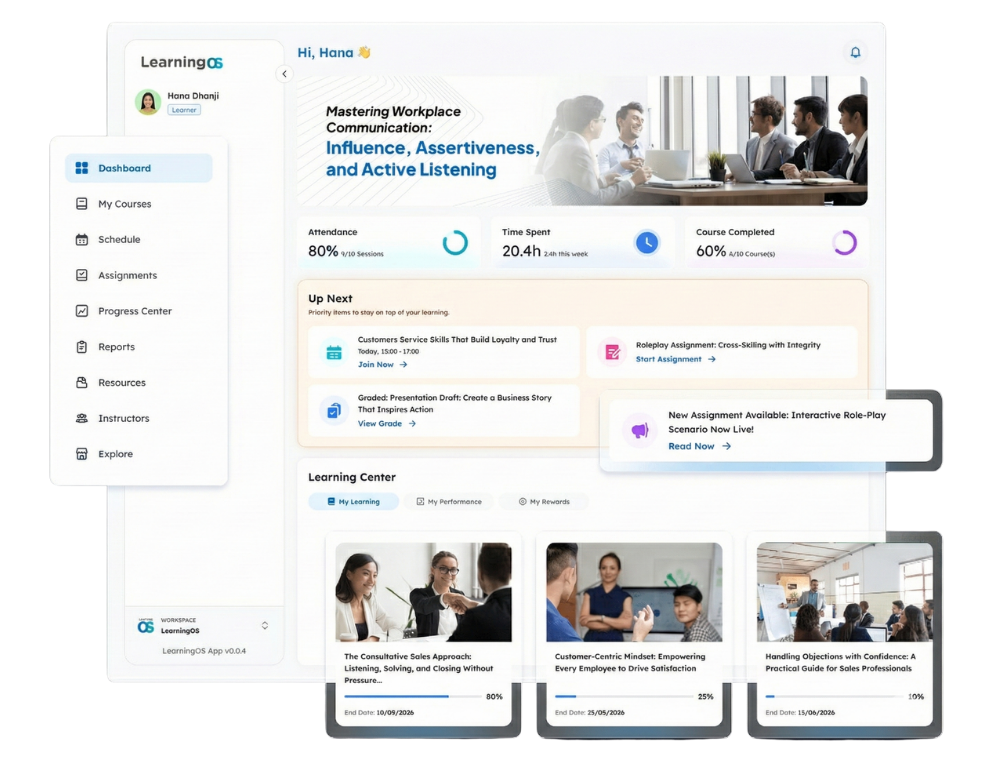
Self-paced learning modules
Structured learning paths
Ongoing reinforcement and assessment
This approach accelerates understanding while allowing new hires to learn at their own pace.
Platform Capabilities That Support Scalable Onboarding
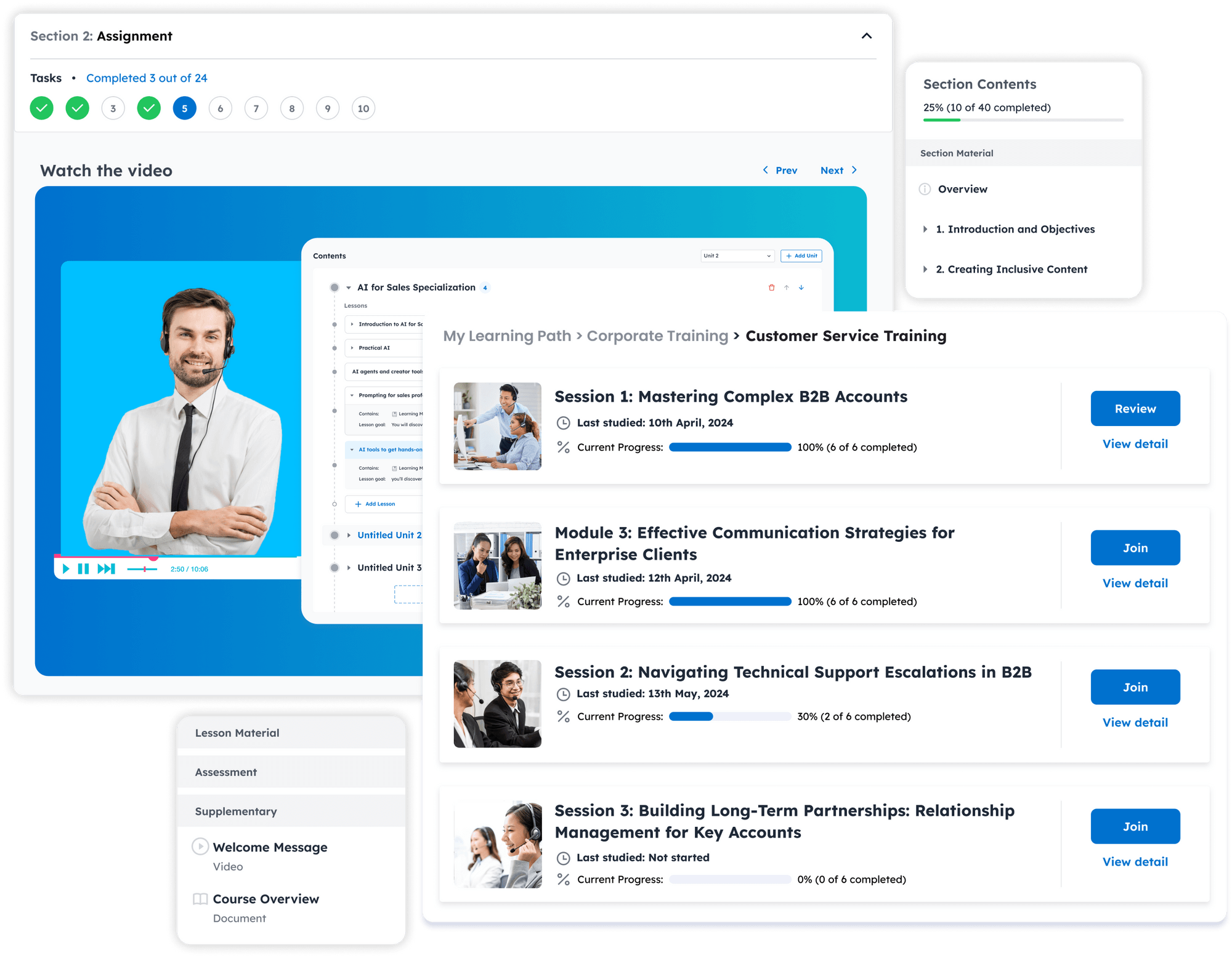
Structured Learning Paths
Guide new hires through a clear sequence—from orientation and policies to role-specific knowledge and expectations.
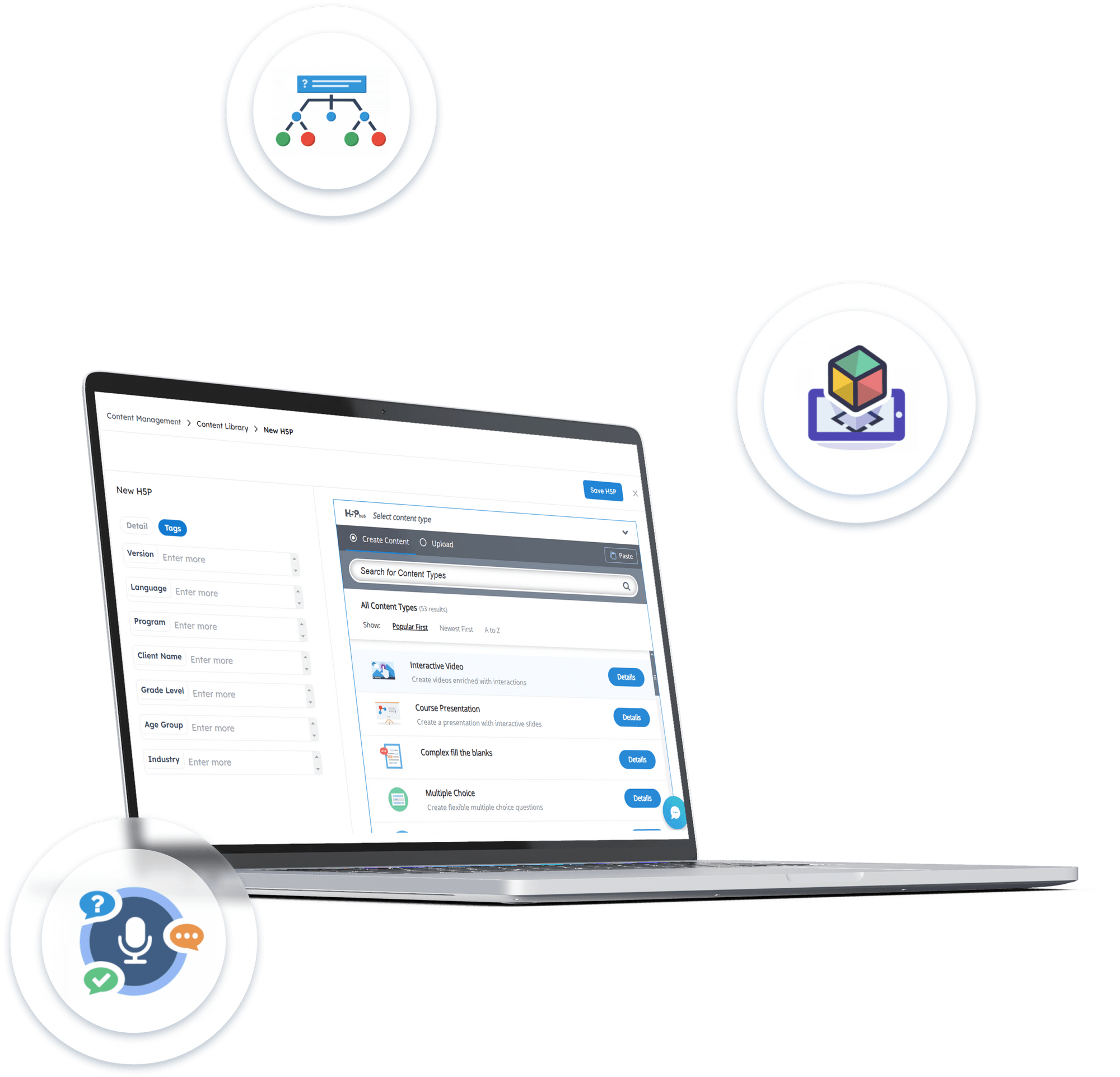
Centralized Content Management
Maintain a single source of truth for onboarding materials, policies, procedures, and resources.
Clear Analytics and Tracking
Monitor completion, engagement, and progress across teams, roles, and locations.
Flexible Delivery
Support live sessions, asynchronous learning, and blended onboarding models without rebuilding content.
Promote Active Participation—Not Passive Orientation
Effective onboarding requires practice, reinforcement, and clarity—not just information delivery.LearningOS enables:
Applied learning through exercises and real-world scenarios
Reinforcement through repetition and checkpoints
Role-specific customization based on function and seniority
Ongoing access to onboarding content beyond day one